• Skip to main content
  • Skip to footer

Windsor Wealth Management LLC

Investment service in Topsfield, Massachusetts

  • Home
  • About
    • Disclosure
  • Our Difference
  • Services & Fees
    • When to Hire a Financial Advisor
    • FAQ’s
  • Blog
  • Retirement Checklist
  • Contact

Investments

A Key Trend Worth Watching & Your Portfolio

December 29, 2025 by David Bunker

There’s been no shortage of noise lately about an “AI bubble.”

Yet, the data suggests we’re seeing a structural shift in how the economy operates—driven by steady, long-term investments rather than speculation.

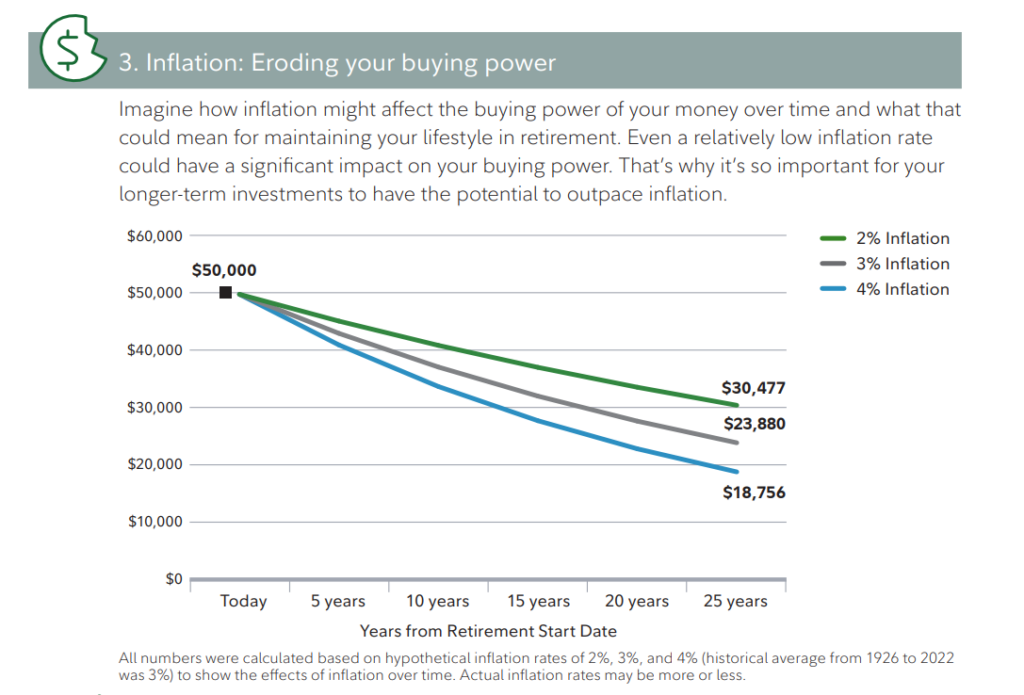
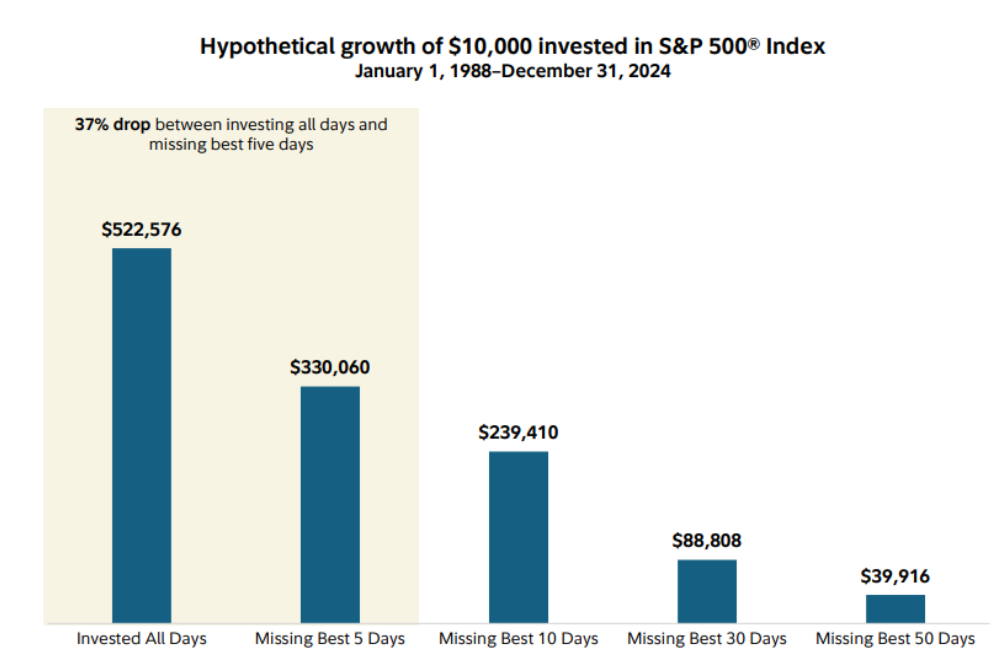
As the chart below shows, technology and R&D spending as a share of the U.S. economy is now higher than it was during the dot-com era, currently led by massive investments in AI infrastructure.

However, unlike the 90s, today’s tech leaders are backed by robust earnings and significant cash reserves—capital that’s available for acquisitions, stock buybacks and weathering downturns without needing to raise outside funding.


Chart Source: Capital Group1

Who will win? A key trend to watch.

All this spending begs the question: how does this build-out translate into shareholder returns?

While current winners include the companies building data centers and power grids that supply the computing power AI requires, history suggests the biggest beneficiaries may not even exist yet.

Just as the internet reaching critical mass enabled companies like Facebook (Meta) and PayPal, today’s AI infrastructure build-out is setting the stage for a new generation of high-growth businesses.

So who will they be?

That’s the key question—and only time will tell.

In the meantime, we’re focused on data and research—tracking where investment, earnings and innovation are converging.

You can read more about this concept and the data behind it in Capital Group’s article, 4 charts on why the U.S. economy could stay resilient.2


Your Portfolio: Rebalancing Is Critical During Aggressive Growth

One of our core disciplines during periods of strong growth is frequent rebalancing.

Specifically, trimming positions and taking profits when portfolios drift out of alignment, rather than chasing what’s already run up.

As always, our focus remains the same: staying invested, staying balanced and keeping your long-term plan on track—regardless of the headlines.


Final Thought

It’s important to remember that roughly $7.5 trillion is sitting in money market funds and cash equivalents waiting to be invested.

This sidelined capital adds a significant layer of economic stability, especially during times of loud “AI bubble” noise.

If you’d like to talk through how this trend fits into your portfolio, reach out anytime.

Happy Holidays,

–David Bunker, Financial Advisor & Licensed Fiduciary


P.S. — I recently spent some time analyzing the year ahead. If you’re curious about what’s coming next, you can find my breakdown here: Rate Cuts, Jobs and Growth: A Look at 2026.


Before You Go

Get help optimizing your retirement income. Download our FREE “Prolonging Retirement Income” checklist.

Also, receive help retiring to the life you want, schedule a complimentary financial planning consultation.


This communication was prepared with financial writer Sharron Senter’s assistance, based on interviews with David Bunker, a financial advisor and licensed fiduciary.

Source:

1 & 2: Capital Group, 4 charts on why the U.S. economy could stay resilient, https://www.capitalgroup.com/ria/insights/articles/4-charts-us-economy-resilient.html


Filed Under: Economy, Investing Philosophy, Investments, Windsor Insights, Windsor Money Minute Tagged With: Financial Planning

Rate Cuts, Jobs, Growth: A Look at 2026

December 16, 2025 by David Bunker

As we wrap up 2025, we’re closing the books on a year that delivered strong markets and a few surprises along the way.

More importantly, the trends taking shape now will help guide the decisions we make together in 2026.


Today, we discuss:

  • How the markets performed in 2025.
  • Why the Fed is likely to cut rates again.
  • Where the job market is showing quiet signs of stress.
  • What GDP growth and corporate earnings suggest for 2026.

2025 Market Review: Better Than Average

It’s been another impressive year for the stock market.

Year-to-date, we’ve seen growth of about 16.5%, following a strong 24% gain in 2024.

For perspective, the market usually averages around 8% to 10% each year, so we’re well ahead of the curve.

The one major bump we faced was a steep (but short-lived) drop in April when new tariffs were announced. This created a lot of uncertainty. Companies that rely heavily on global suppliers, like Walmart, saw their stock dip instantly.

In anticipation of the tariffs first mentioned in February, Walmart’s stock had already begun its decline from a high of $105 per share. When the tariffs were officially announced in April, the stock dropped further from $89 to a low of $82 per share, but it bounced right back. It’s currently trading strong at $115 per share, driven by people looking for better deals and the company’s leadership in online shopping and delivery.1

The good news is that many companies have adapted to the new tariffs.

For example, Walmart has successfully shifted a great deal of its product sourcing from China to India and Southeast Asia, including Vietnam and Thailand.

Ultimately, the tariffs caused uncertainty, but the market bounced back strongly.


Let’s switch gears now, and talk about three financial projections and key themes for 2026…


#1—Continued Rate Cuts

The Fed has a tough job: they must balance keeping inflation near their 2% target (now about 2.8%) while also ensuring the job market stays strong.

This balance is currently fragile.

To counteract the current risks in the economy, the Fed will likely continue to cut interest rates both in December and in early 2026. These cuts aim to lower borrowing costs, give the job market a lift and restore consumer confidence.

As long as the job market doesn’t weaken too fast, these cuts should help maintain steady economic conditions throughout 2026.

Related: We took a closer look at the delicate balancing act of rate cuts in our recent post, Today’s Economy: What’s Actually Going On?


#2—Labor Market Fragility

A key risk to the economy right now is the pressure placed on jobs, with the primary labor market weakness being concentrated in job cuts at small businesses.

This development will likely continue in 2026.

Signs of this trend were apparent in the November 2025 ADP report, with Reuters reporting an unexpected decline in private payrolls. (ADP processes payroll for 1 in 6 workers in the U.S.)2

This data suggests that while big company layoffs make headlines, the real pressure is happening quietly: small businesses are cutting jobs and offering fewer openings.

Read the full Reuters article here: US private payrolls post largest drop in more than 2-1/2 years in November.3

This pressure can create a dangerous self-fulfilling prophecy, consisting of a three-part cycle:

  1. Small businesses cut jobs due to uncertainty.
  2. People who are worried about losing their jobs start spending less money.
  3. The consequent slowdown validates the initial fear, making the prophecy self-fulfilling.

Keep in mind, small businesses are the main source of new jobs.

According to the U.S. Small Business Administration Office of Advocacy, “The U.S. contains 36.2 million small businesses, which account for almost 46% of private sector employment [share of employees]. From March 2023 to March 2024, U.S. small businesses created approximately 9 out of every 10 net new jobs.”4

If this massive engine pulls back on hiring or starts laying off, the overall job market quickly loses its critical source of new growth.

Two Other Points to Consider:

  • The low 4.4% unemployment rate doesn’t yet reflect what’s happening on the ground. Small business layoffs usually take a few months to show up in data, and the recent government shutdown added an extra delay. We’ll see some clarity when the November jobs report is released in mid-December.
  • We’ve yet to see any broad, hard data (enough to say there’s a clear trend) reflecting the real labor efficiency gains that artificial intelligence (AI) is expected to create. Up until now, the evidence we do see is largely anecdotal.

#3—Moderate Economic Growth

Most analysts’ forecasts for 2026 show U.S. economic growth ranging from 1.8% to 3.2%.

Even at the low end, a growing economy generally makes things easier because there’s more “pie” to go around for everyone.

This projected growth is supported by strong corporate earnings and by the fact that the tariffs didn’t lead to the severe economic damage many feared back in April. Remember, market sentiment also drives growth.

Finally, the housing market could provide a significant lift to the economy.

If the Fed continues to cut rates in 2026, it should cause interest rates and mortgage rates to keep coming down—possibly falling into the 5% range (optimistic but plausible). This could encourage more people to buy homes.

When the housing market picks up, it creates a ripple effect across the entire economy: demand increases for repairs, furniture, appliances and other home improvement projects, which in turn boosts thousands of businesses.

Lastly, on the investment side, several major banks are forecasting a 10% to 12% return for the stock market next year. As always, these are just estimates, but they reflect a generally healthy outlook for corporate earnings and valuations as we head into 2026.


Sincerely,

–David Bunker, Financial Advisor & Licensed Fiduciary


Before You Go

Get help optimizing your retirement income. Download our FREE “Prolonging Retirement Income” checklist.

Also, receive help retiring to the life you want, schedule a complimentary financial planning consultation.


This communication was prepared with financial writer Sharron Senter’s assistance, based on interviews with David Bunker, a financial advisor and licensed fiduciary.


Sources:

1: Nasdaq.com, Walmart Inc. Common Stock (WMT), nasdaq.com/market-activity/stocks/wmt/historical

2: adp.com

3: Reuters, US private payrolls post largest drop in more than 2-1/2 years in November, reuters.com/business/us-private-payrolls-unexpectedly-decrease-november-adp-says-2025-12-03

4: U.S. Small Business Administration Office of Advocacy, New Advocacy Report Shows the Number of Small Businesses in the U.S. Exceeds 36 million, advocacy.sba.gov/2025/06/30/new-advocacy-report-shows-the-number-of-small-businesses-in-the-u-s-exceeds-36-million


Filed Under: Economy, Financial Planning, Interest Rates, Investments, Stock Market, Windsor Insights

September 2025 Market Update & Key Trends

September 21, 2025 by David Bunker

It’s been an interesting year in the markets, and with just a few months left in 2025, now’s a good time to pause and take stock of where things stand.


In today’s update, we cover key market trends:

Year-to-Date Performance: Markets are up about 11%, led by tech and industrials.

Corporate Earnings: Strong results are driving markets to new all-time highs.

Inflation & Jobs: Inflation rose slightly last month and jobs have slowed.

AI Spending: Tech giants are in a race for market share.

Interest Rates: A future Fed rate cut looks likely.

Global Markets: International stocks are outpacing the U.S.

Your Portfolio: We’ll discuss why rebalancing remains critical.


A Strong Year for the Market

Year-to-date, the market is up about 11%—a solid number for just over eight months.

Much of the strength comes from a few sectors, including technology (Microsoft, Nvidia) and communication services (Google, Netflix). Also, industrials are performing well, up around 15% (Raytheon, Boeing, Caterpillar).

However, healthcare has barely moved, gaining about 1%. It’s hampered by political and regulatory uncertainty. Specifically, concerns are over potential changes to drug pricing and Medicare policies.

Other market activity included a brief hiccup back in April due to tariffs, when uncertainty pulled the market lower. However, markets have recovered and are now hitting new all-time highs.

Remember, tariffs only effect about 15% of U.S. GDP. We discussed the “real” impact of tariffs earlier this year in our post: The Economy, Tariffs & Consumer Sentiment. Suffice it to say, the media often leaves out vital information.


Earnings Drive the Story

At the end of the day, daily headlines create noise, but company earnings give us the real signal.

Overall, corporate profits are strong. In fact, much stronger than analysts expected coming into the year. Early-year forecasts predicted about 5% growth, but companies are on track for closer to 10%.

This strength has helped push markets higher despite ongoing worries about jobs and tariffs.

In fact, Morgan Stanley’s top equity analyst details three reasons for continued market growth in the coming months. (Note: the article allows one free view before a paywall.)1


Inflation & Jobs

Inflation is at 2.9% (up from 2.7% in July). The Fed’s long-term target is 2%. The rise is primarily being driven by increases in housing, food and energy costs. For a deep dive, read the August Consumer Price Index report.2

The job market has continued to soften. Government jobs are shrinking (includes early retirement packages), and many companies are trimming staff while raising prices to keep profits steady.

The August jobs report showed the U.S. added just 22,000 jobs, June was revised to a –13,000 job loss, and the unemployment rate rose to 4.3% (July was 4.2%), signaling a clear slowdown in the labor market.3

This Reuters article provides some simplified charts showing monthly changes in U.S. jobs, government jobs, and job gains and losses by sector.4

A key question in the months ahead is whether slowing job growth will become a bigger drag or if the economy can grow through it.


The AI Market Share Race

AI spending continues to be a major driver of economic growth.

Big tech companies, e.g., Microsoft, Nvidia, Google, etc., are pouring hundreds of billions into AI infrastructure.

It’s expensive, but unlike the dot-com bubble of the early 2000s, these are well-established, profitable companies with the resources to sustain the investment. This is a major contrast to the dot-com era, when many companies were newly formed and had no profitability history.

Overall, it’s a market share race; specifically, a competition to become leaders in a transformative technology.


Interest Rates & Global Markets

Markets are currently pricing in a 95% chance the Fed will cut rates soon, likely by 25 basis points. Overall, we’re anticipating a 1% cut by year-end.

Lower rates will help ease pressure on mortgages, boost housing activity and support continued growth.

Finally, international stocks are up about 20% this year, outpacing U.S. markets (for a change). Our decision to increase your exposure earlier this year is helping your portfolio take advantage of this momentum.


Portfolios

Tech’s fantastic run has been great for portfolios, but it can also make the sector a little too big.

This is why we’re constantly rebalancing, taking some of those profits and reinvesting them to keep portfolios diversified.

It’s an especially smart move in non-taxable accounts, since we can do it without a tax hit. We’re always watching your portfolio’s sector weightings to help keep it balanced and strong.


Please reach out with any questions.

–David Bunker, Financial Advisor & Licensed Fiduciary


Before You Go

Get help optimizing your retirement income. Download our FREE “Prolonging Retirement Income” checklist.

Also, receive help retiring to the life you want, schedule a complimentary financial planning consultation.


This communication was prepared with financial writer Sharron Senter’s assistance, based on interviews with David Bunker, a financial advisor and licensed fiduciary.


Sources:

1: MarketWatch, The stock market is hitting records — three reasons why top Morgan Stanley strategist sees more room to run, https://www.marketwatch.com/story/the-stock-market-is-hitting-records-three-reasons-why-top-morgan-stanley-strategist-sees-more-room-to-run-33892ee8

2: Bureau of Labor Statistics, Consumer Price Index – August 2025, https://www.bls.gov/news.release/pdf/cpi.pdf

3 & 4: Reuters.com, US unemployment rate near 4-year high as labor market hits stall speed, https://www.reuters.com/business/us-unemployment-rate-near-4-year-high-labor-market-hits-stall-speed-2025-09-05/


Filed Under: Economy, Interest Rates, Investments, Stock Market, Windsor Insights

AI Is Booming, Diversification Matters

June 28, 2025 by David Bunker

For a while now, we’ve been hearing how artificial intelligence (AI) is reshaping the investment landscape.

Much of the growth has come from a small group of stocks; specifically, the Mag 7: Alphabet, Amazon, Apple, Meta Platforms, Microsoft, Nvidia and Tesla.

Their recent performance has been remarkable, driving an outsized share of the S&P 500’s gains.

Here’s a look at the Mag 7’s performance since the 2025 market low in early April:

Alphabet (Google): 23.43, Amazon: 27.51, Apple: 17.54, Meta Platforms (Facebook, etc.): 37.60, Microsoft: 32.82, Nvidia: 49.49, Tesla: 46.98 — (Source: Morningstar, reported on 6/16/251)

Still, with so much riding on so few companies, market concentration is a real concern.

While AI presents exciting growth opportunities, it’s important to diversify within the AI sector itself, beyond just the largest players. This helps capture a broader range of innovation and mitigate risk.

For Example:

Diversification could include niche players and startups focused on AI in healthcare, finance, robotics and cybersecurity, or hardware manufacturers supporting data center expansion for AI workloads.

What’s more, you can diversify based on customer adoption cycles, e.g., AI in logistics or biotech may ramp up at different times than AI in social media or e-commerce.

Your Portfolio & Diversification

One of our key roles is to help ensure your portfolio isn’t overly reliant on any one company or sector. We stay diversified by spreading across industries, incorporating global opportunities and maintaining a mix of stocks, bonds and alternatives (e.g., real estate funds) to manage risk and support long-term growth.

Also, we review 20-to-30 accounts daily, adjusting holdings to maintain target asset allocations. This helps ensure your portfolio is aligned with your investment goals and market conditions.

To learn more, read our investment philosophy statement: A Disciplined, Research-Driven Approach to Investment Success.

Related: We discussed the Mag 7 earlier this year in our post: S&P 500 Shifts From Home Runs to Singles and Doubles.

–David Bunker, Financial Advisor & Licensed Fiduciary


Before You Go

Get help optimizing your retirement income. Download our FREE “Prolonging Retirement Income” checklist.

Also, receive help retiring to the life you want, schedule a complimentary financial planning consultation.


This communication was prepared with financial writer Sharron Senter’s assistance, based on interviews with David Bunker, a financial advisor and licensed fiduciary.


Source:

1: Morningstar, These Are the Best Mag Seven Stocks to Consider for AI Investing, https://www.morningstar.co.uk/uk/news/266066/these-are-the-best-mag-seven-stocks-to-consider-for-ai-investing.aspx


Filed Under: Investments, Stock Market, Windsor Insights

Is market news scaring you? Here’s the bigger picture.

April 25, 2025 by David Bunker

Could the financial news headlines be more daunting?

Trade uncertainty and its economic ripple effects are behind most of these headlines. (Read our post for the “real” impact of tariffs.)

However, a crucial point often absent in media coverage is the historical link between market volatility and long-term portfolio growth.

For Example:

The below chart depicts the growth of one dollar from 1926 till 2024. The red lines highlight 20%+ market drops.

As you’ll see, time after time the market bounces back—even higher.


Your Financial Plan

We’ve built your financial plan to navigate market volatility.

Candidly, if you want long-term portfolio growth, then the price you pay is short-term volatility.

Unsurprisingly, we’ve seen this recent volatility before, i.e., during Covid. And, we bounced back from that—even higher!

Uncertainty drives volatility.


No one knows when the volatility will end. Nevertheless, we’re confidently buying valuable companies on sale.

I encourage you to stay the course and maintain your financial plan.

Reach out with any concerns or questions.

–David Bunker, Financial Advisor & Licensed Fiduciary


P.S. Thank you to everyone who requested a copy of Bill Perkins’ “Die With Zero.” I was thrilled by the response following last month’s email, How To Spend Confidently & Without Regret in Retirement, where we discussed the book. I still have a few copies available, so please let me know if you’d like one.


Before You Go

Get help optimizing your retirement income. Download our FREE “Prolonging Retirement Income” checklist.

Also, receive help retiring to the life you want, schedule a complimentary financial planning consultation.


This communication was prepared with financial writer Sharron Senter’s assistance, based on interviews with David Bunker, a financial advisor and licensed fiduciary.


Filed Under: Economy, Investing Philosophy, Investments, Stock Market, Windsor Insights, Windsor Money Minute

What’s the Santa Claus rally phenomenon? 5 Potential Factors

December 30, 2024 by David Bunker

Ho, Ho, Ho.

The year just isn’t complete without mentioning the Santa Claus rally.

Santa Claus Rally
Photo by Microsoft’s AI Image Creator

Santa Claus Rally


The Santa Claus rally is a stock market seasonal trend; specifically, stocks tend to rise during the last five trading days of December and the first two days of January.

The Santa Claus rally phenomenon is often attributed to several factors, including:

Increased Optimism: Investors are feeling festive.

Vacations: Many institutional investors are on vacation, (i.e., fewer large trades reduce market volatility).

Less Tax Activity: Tax-loss harvesting typically slows down in late December, compared to early December.

Window Dressing: Financial firms may make strategic buys in December to improve the appearance of their portfolios.

Year-End Bonuses: Many individual investors use their year-end bonuses to buy stocks, which can boost market activity and prices.


Will it be a jolly good December for stocks?

Only time will tell!

While we’re waiting, here’s a quick look at the last 26 years:

Santa Claus Rally
Source: Investor’s Business Daily

Related: For more stock market seasonal trends, check out our blog post, Stock Market Seasonality and the September Effect.


Happy Holidays

As the year winds down, I hope you find time to relax and recharge. Reach out anytime.

With gratitude,

–David Bunker, Financial Advisor & Licensed Fiduciary


Before You Go

Get help optimizing your retirement income. Download our FREE “Prolonging Retirement Income” checklist.

Also, receive help retiring to the life you want, schedule a complimentary financial planning consultation.


This communication was prepared with financial writer Sharron Senter’s assistance, based on interviews with David Bunker, a financial advisor and licensed fiduciary.


Filed Under: Financial Planning, Investments, Stock Market, Windsor Insights, Windsor Money Minute

Three 2025 Financial Projections and New Trend

December 23, 2024 by David Bunker

Before delving into our new year projections, Julie and I would like to wish you and your family a wonderful holiday season and a prosperous new year.


Photo by Clever Visuals/Unsplash

In today’s discussion, we:

– Provide a brief 2024 reflection.

– Offer three 2025 financial projections.

– Expose a new financial trend.


Related: Windsor Wealth Management’s 2024 projections. They all came true!


2024 Financial Reflection

The market has soared 29% this year, building on the 26% gain in 2023 and recovering from the 18% downturn in 2022.

Much of this growth has been driven by AI and the tech giants: Alphabet, Amazon, Apple, Meta, Microsoft, Nvidia and Tesla, aka the Mag 7.

Interestingly, the market’s surge has defied expectations, surprising most Wall Street analysts.

Bonds have also made a comeback this year, with the Bloomberg Aggregate Bond Index (Agg) up 3.02% year-to-date.

Still, our bond portfolios have really shined, gaining a solid 4.7% year-to-date.

Why are our bond portfolios outperforming the average?

Because we construct your bond portfolio with high-quality bonds, focusing on short-term (1-3 years) and intermediate-term (3-10 years) maturities. Overall, shorter terms are more stable.

Longer-term bonds can be a bit of a rollercoaster ride. They can go way up, but they can also go way down. Therefore, we stick with shorter-term bonds for a smoother ride.


Windsor Wealth Management’s

2025 Financial Projections


Given the time of year, it’s always fun to make new year projections.

Remember, though, our primary focus is on planning. Specifically, building resilient financial plans and investment portfolios that can adapt to changing market conditions, since the only constant is change.

Let’s dive into our three projections…


#1—Continued Economic Growth

We’re expecting another robust year for 2025.

Currently, the U.S. economy benefits from a strong labor market, rising corporate profits and easing inflation.

The International Monetary Fund (IMF) projects a 2.2% GDP growth rate for 2025. What’s more, the global investment firm Capital Group’s estimates are even higher at 2.5%-3%, according to the firm’s economists.

A key factor impacting future growth will be the new administration’s policies, including potential tariff increases, tax cuts and deregulation.


#2—Limited Interest Rate Cuts

As of early December, the Fed has cut interest rates twice: 0.50% in September and 0.25% in early November.

We expect the Fed to cut rates again in early 2025, but more likely by a smaller margin. Much of the timing and extent of cuts will depend on economic conditions.

The Fed is worried that further rate cuts could reignite inflation. Also, increased tariffs can exacerbate this risk by increasing the cost of goods.

As an aside, 30-year mortgage rates have fluctuated recently. They peaked at 7.29% a year ago, dipped to 5.95% a few months ago, and currently sit at about 6.81%.


#3—Minor Inflation Movement, But Continued Price Pressure

Inflation has improved, but prices are still rising, just at a slower pace.

Inflation was 3.24% a year ago, it’s now around 2.6%. That’s a decrease of approximately 19.1% year-over-year as of late November.

It’s unlikely, however, we’ll see significant price decreases in 2025, especially for food and housing.

The housing market, while slowing, remains strong. Many sellers are largely able to get the full asking price, especially where there’s low inventory. This can contribute to higher inflation, as rising home prices can drive up costs for things like moving, furniture and appliances.

Related: See our post discussing limited housing inventory and the “why” behind it.

In general, a strong economy typically leads to increased demand for goods and services, which can drive up prices. Also, when companies are profitable, they can pass on increased costs to consumers, potentially causing inflationary pressures.

What’s more, if inflationary pressures and/or supply chain issues occur in 2025, then you’ll likely see more shrinkflation.

For example, last year a regular box of cereal shrank 22.0%, from 10 oz. to 7.8, and 48% of American shoppers have abandoned a brand due to shrinkflation, according to Capital One shopping research.

Seriously, could the packaging get any smaller or emptier?!

We’d love to hear your thoughts about this.

Have you recently stopped purchasing from a brand that you used to favor, perhaps due to a decline in value or quality?


New Financial Trend

We’re seeing more diversification within portfolios.

Specifically, companies beyond the Mag 7 are increasingly driving growth, and we’re anticipating this trend will continue in 2025.

This broader market participation is a healthy sign for the economy.

For a deep dive, read T. Rowe Price’s article, Unlocking opportunities: Market broadening and a new chapter for emerging markets.


Wishing you a wonderful holiday season.

Sincerely,

–David Bunker, Financial Advisor & Licensed Fiduciary


Before You Go

Get help optimizing your retirement income. Download our FREE “Prolonging Retirement Income” checklist.

Also, receive help retiring to the life you want, schedule a complimentary financial planning consultation.


This communication was prepared with financial writer Sharron Senter’s assistance, based on interviews with David Bunker, a financial advisor and licensed fiduciary.


Filed Under: Investments, Prices, Stock Market, Windsor Insights

Elections and Your Investments, Stay the Course

October 28, 2024 by David Bunker

The presidential election is fast approaching.

Generally, elections create uncertainty and market volatility both before and after voting—no matter who wins. They also can cause investing anxiety.

Therefore, as a friendly reminder…

Stay the course, and remember our two key investing principles:

#1—Have a Plan, Play Your Plan

#2—Control What You Can Control

While short-term market fluctuations can be unpredictable (and uncomfortable), maintaining a long-term investment strategy has historically outperformed other approaches.

For example, let’s consider the following two charts:

CHART 1

Stocks have had a positive return in 83% of presidential election years, according to Hartford Funds research.

Elections and Investments

See Hartford Funds full analysis.


CHART 2

What happens after the next administration takes power?

The following chart created by Russell Investments, analyzes three scenarios to show how a $100,000 investment might perform in the first year and three years after an election.

Spoiler Alert: Remaining invested pays off.


Elections and Investments
Data source and analysis: Morningstar Direct. Time periods examined: 1977-1979, 1981-1983, 1985-1987, 1989-1991, 1993-1995, 1997-1999, 2001-2003, 2005-2007, 2009-2011, 2013-2015, 2017-2019. Equity: Ibbotson U.S. Equity Index (1975-1983), Russell 3000 Index (1984 – Present). Bonds: Ibbotson Intermediate Bond Index (1975-1985) linked to Bloomberg U.S. Aggregate Bond Index (1986-Present). Cash: Citigroup 1-3 Month T-Bill Index. Index returns represent past performance, are not a guarantee of future performance, and are not indicative of any specific investment. Indexes are unmanaged and cannot be invested in directly. In USD.

While the future is uncertain, historically, staying invested has proven to pay off in the long run.


Election & Investing News (Be Skeptical)

There’s an amazing amount of election and investing news misinformation.

Therefore, we’re encouraging you to question the legitimacy of all news.

  • Consider the Source: Be aware of news outlets’ biases and agendas.
  • Check Multiple Sources: Verify what you’re being told.
  • Use Fact-Checking Resources: For example, Snopes is a fact-checking website that debunks rumors and hoaxes, and FactCheck.org fact checks politics.
  • Be Skeptical: Approach news with a critical eye; question everything you read.

Related: Speaking of being skeptical, in a recent client letter we discussed 12 Steps to Help Protect Yourself From Data Breaches. Being skeptical of all-things-digital ranks at the top to help protect your personal information.

Finally, if you’re experiencing increased anxiety due to the elections, taking a break from news and social media can often help settle you.

–David Bunker, Financial Advisor & Licensed Fiduciary


Before You Go

Get help optimizing your retirement income. Download our FREE “Prolonging Retirement Income” checklist.

Also, receive help retiring to the life you want, schedule a complimentary financial planning consultation.


Filed Under: Investments, Presidential Elections, Windsor Insights, Windsor Money Minute

Footer

Amplify Your Retirement Income

"Prolonging Retirement Income" Checklist
Please enable JavaScript in your browser to complete this form.
Name *
Loading

Windsor Insights

A Key Trend Worth Watching & Your Portfolio

There’s been no shortage of noise lately about an “AI bubble.” Yet, the data suggests we’re seeing a structural shift in how the economy … [Read More...] about A Key Trend Worth Watching & Your Portfolio

More Posts from this Category

  • Home
  • About
  • Testimonials
  • Contact

Windsor Wealth Management, LLC · 27 Main Street · Topsfield, MA 01983 · (978)887-6940 · WindsorWM.com · Email Us

Investment Advisory Services offered through Bay Colony Advisors, an SEC Registered Investment Advisor

Disclosure
Form ADV Part 2A – Disclosure Brochure
Form ADV Part 3: Relationship Summary Bay Colony Advisory Group, Inc.

Copyright © 2026 · Website Design · Admin

Copy written by financial services writer Sharron Senter